
 By

Seoul gives a first-time visitor several distinct versions of the city: royal palaces and traditional houses, busy food markets, contemporary design and neighborhoods that come alive after dark. Start with the historic center, then choose a market afternoon and an evening that matches your interests. Save a separate stretch for a different neighborhood instead of treating every landmark as one long checklist. Visit Seoul’s first-time guide brings many of these places together; the choices below help you decide what deserves your time.
Begin with a palace and the historic center
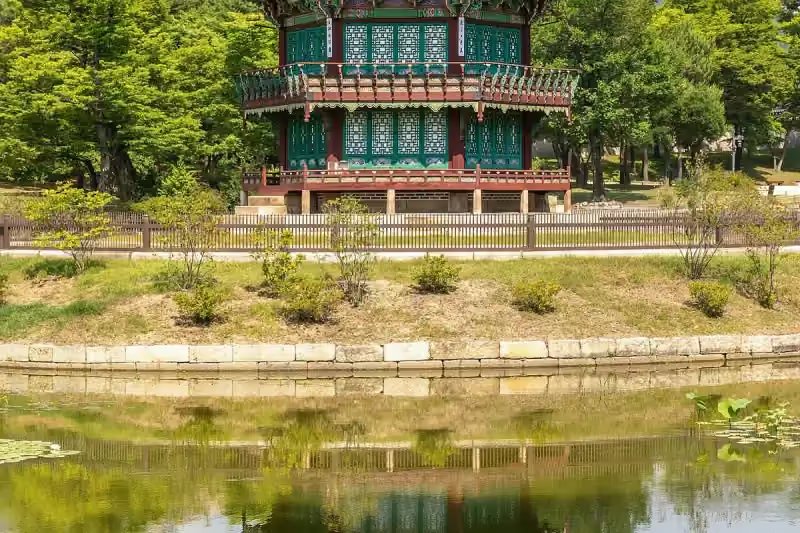
Make Gyeongbokgung Palace and the Gwanghwamun area your introduction to Seoul’s royal history. Around Gwanghwamun, the city tourism guide groups the palace with Gwanghwamun Square, Insa-dong, Bukchon and Seochon, giving you several ways to continue exploring after the palace. This is the strongest starting area for travelers who want historic sights to shape their first impression rather than spending the whole day indoors. Visit Seoul’s first-time guide describes the area and its nearby choices.
Keep the palace day flexible. The Royal Palaces and Tombs Center’s visiting-hours page lists Gyeongbokgung as regularly closed on Tuesdays and shows different closing and last-entry times by season. If your available sightseeing day is Tuesday, put the surrounding streets or another neighborhood first and move the palace visit to an eligible day. Travelers most interested in royal sites could also give Changdeokgung its own visit rather than trying to rush between palaces.
See Bukchon as a neighborhood where people live
Bukchon’s traditional hanok houses offer a different kind of historic experience from a palace. Its streets sit between Gyeongbokgung and Changdeokgung, and the area also contains galleries, workshops and the Bukchon Cultural Center. Those details make it a worthwhile daytime continuation for someone curious about architecture and living traditions. Visit Seoul’s Bukchon guide is explicit that this is a residential neighborhood, not a purpose-built attraction.
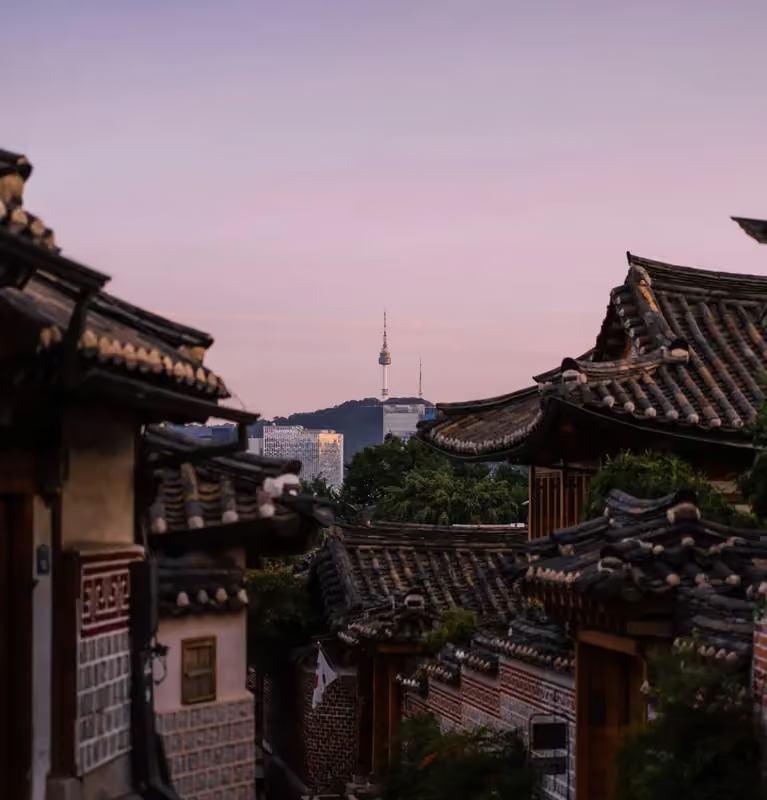
Plan Bukchon with its residents in mind. In the designated red zone around Bukchon-ro 11-gil, tourist visits are restricted from 5 p.m. until 10 a.m. the next day; the Seoul Metropolitan Government’s notice says violations can be fined. Visit during permitted hours, keep voices low and leave private homes out of your photos. Bukchon works as a considered part of a daytime historic-center visit, not an early-morning or late-evening photo stop.
Choose a food market or a design-focused afternoon
Gwangjang Market is the food-led choice. Visit Seoul highlights mung-bean pancakes and gimbap alongside stalls selling traditional clothing and souvenirs. It gives a first-time visitor a concrete place to try market food after exploring the older streets. If browsing and eating are your priorities, leave enough unplanned time here to choose what appeals rather than making the market a brief stop between landmarks. Visit Seoul’s first-time guide describes the market’s food and shopping mix.
For a more contemporary contrast, continue toward Dongdaemun Design Plaza. The same city guide describes it as a design and cultural complex associated with exhibitions, performances and fashion events. Its distinctive building is a reason to see the area even when a particular event is not part of your plan. Choose Gwangjang for a food-centered afternoon, Dongdaemun for design and shopping, or both if those interests matter more to you than adding another palace.
Pick an evening with a different view of Seoul
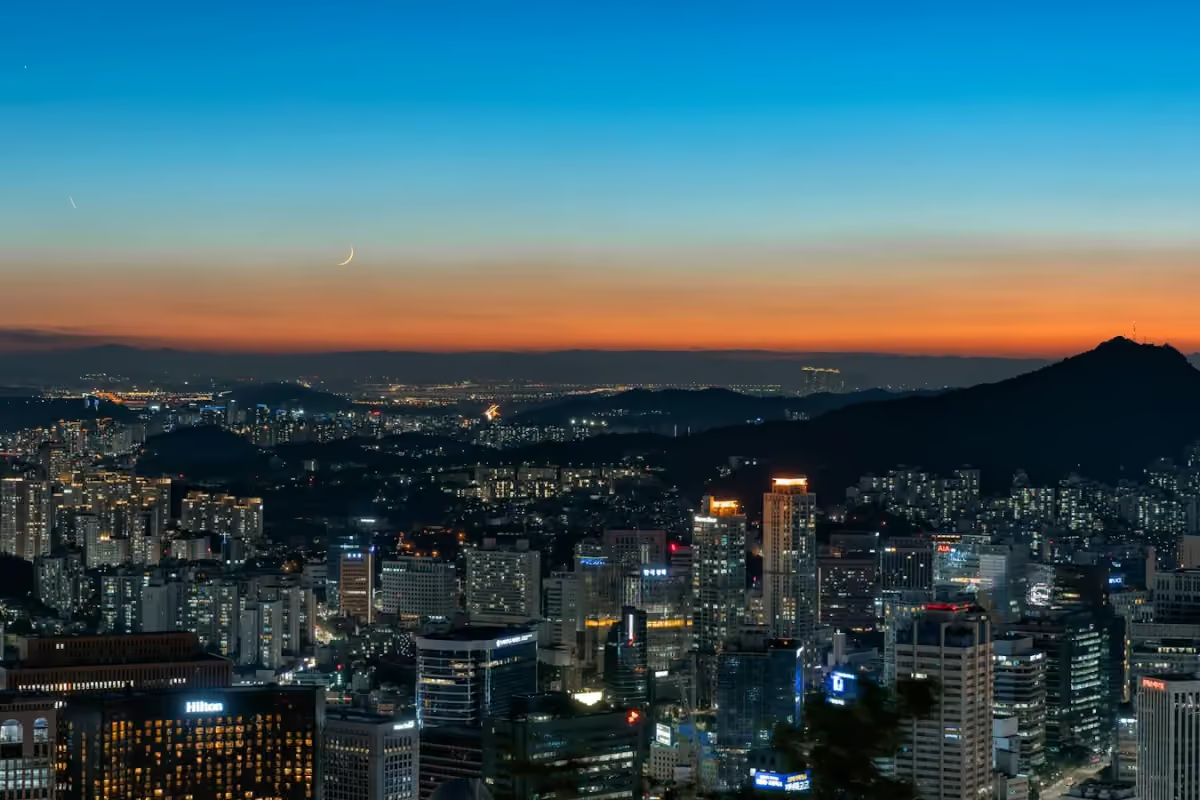
Namsan is the straightforward choice for a city view: Visit Seoul describes walking space in Namsan Park and an observatory at N Seoul Tower. The cable car is one way up, while the park itself gives the outing room beyond the tower. Treat the observatory and cable car as optional paid experiences rather than assuming they are required to enjoy Namsan. Visit Seoul’s first-time guide distinguishes the park, cable car and observatory.
Explore activities on KlookPaid link
Choose Hongdae instead if your ideal evening is about street life and creative culture. Visit Seoul describes performances, fashion and arts activity around Hongik University; its city overview also identifies Hongdae among the areas with bars, clubs and later activity. These are different evenings with different payoffs. Namsan suits a first panoramic view, while Hongdae suits travelers who would rather browse and linger in an active neighborhood.
Choose your season, base and pace
Spring and autumn fit a trip built around outdoor streets and palace grounds. Visit Seoul’s season guide describes spring flowers and autumn color, while noting that summer is hot and humid and winter can be cold. Those are seasonal patterns, not a promise of blossoms, foliage or comfortable weather on particular dates. If you travel in summer or winter, keep the market, design complex and other indoor options available when you want a break from the conditions.
For a first stay, a central base that makes Gwanghwamun and Myeong-dong convenient is a sensible choice if palaces, Bukchon and Gwangjang are your priorities. Choose Hongdae if its arts and evening scene is the main draw. This is a planning recommendation based on the areas described in Visit Seoul’s city overview, not a claim about a particular hotel. The city’s transport guide identifies the subway as the main way to reach major attractions and explains both T-money cards and single-journey tickets.
A satisfying first trip begins with Gyeongbokgung and the surrounding historic area, visits Bukchon during permitted daytime hours, then gives Gwangjang or Dongdaemun an afternoon. Add Namsan for a view or Hongdae for an evening out. If you have more time, give the option you skipped its own outing; Seoul rewards that choice more than racing through both in one night.