
Before a low fare wins you over, put the suitcase beside the ticket. Frontier and Spirit allow the same maximum 18 × 14 × 8-inch personal item, but their carry-on dimensions, checked-bag weights, and fare inclusions differ. The cheapest first screen can become a different purchase once your luggage is added.
Use the side-by-side limits below to choose the bags you need, then compare both directions with the same seat and luggage requirements. A suitcase accepted by one airline may exceed a dimension allowed by the other.
Personal items and carry-ons: the size comparison
| Bag | Frontier maximum | Spirit maximum |
|---|---|---|
| Personal item | 18 × 14 × 8 inches | 18 × 14 × 8 inches |
| Carry-on | 24 × 16 × 10 inches | 22 × 18 × 10 inches |
| Standard checked size | 62 linear inches | 62 linear inches |
Personal items fit under the seat; carry-ons normally use an overhead bin. Measure handles and wheels along with the case. For checked baggage, linear inches means length plus width plus height, not the longest edge.
For a bag you want to use on both airlines, a practical common carry-on envelope is 22 × 16 × 10 inches. That is our comparison of the published limits, not a separate airline rule. A soft bag can still exceed the limit when packed.
Weight limits can change the cost of a checked bag
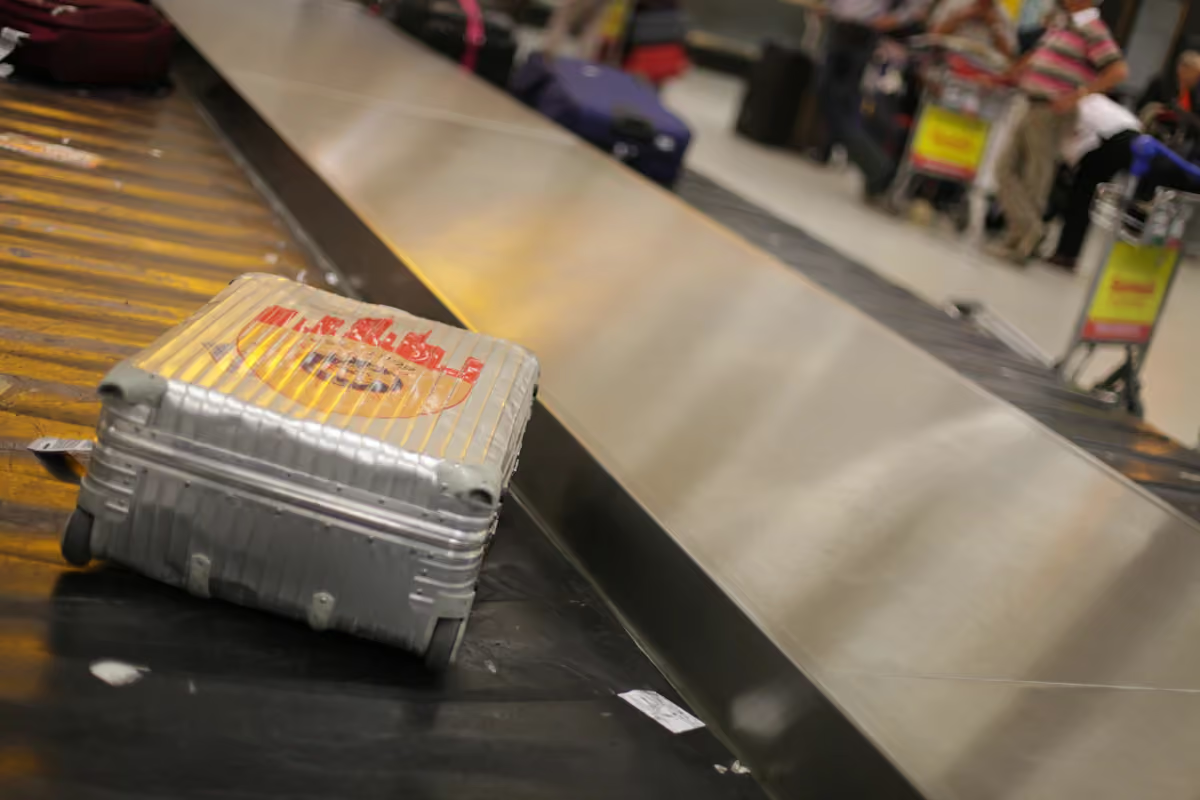
Frontier lists a 35-pound personal-item and carry-on limit, and a standard checked-bag limit of 40 pounds. Some bundles and status benefits allow more. Spirit defines its standard checked bag at up to 50 pounds in the contract reviewed.
That difference matters before comparing a checked-bag purchase. A suitcase weighing 45 pounds is above Frontier’s standard 40-pound allowance even though it is within Spirit’s standard weight limit. Confirm the allowance attached to your fare, including any route-specific restrictions.
Pack medication, essential documents, and items needed during a disruption where you can keep them with you, subject to current screening rules. Paying for a checked bag solves storage space, not access to it during the flight.
Which extras are already included?
Frontier includes one personal item in each direction. Its published bundle chart lists a carry-on with Economy and Premium, and two checked bags up to 50 pounds with Business. This makes a bundle comparison more informative than assuming every Frontier ticket excludes overhead luggage.
For Spirit, read the named fare’s inclusions during booking and match them to the contract’s bag limits. Do not translate an old fare or bundle name into today’s allowance without current evidence.
If you only need an under-seat bag, compare tickets on that basis. If you need both an overhead suitcase and a checked case, price that combination from the start. Adding a bundle full of unused extras can also cost more than the particular services you need.
Price the bags for your actual trip
Frontier explicitly says bag prices vary with travel dates and purchase timing and provides a bag-price checker. Use the checker for your route and purchase stage before choosing the fare. Spirit’s checkout must likewise establish the amount for the fare you are buying.
Record each airline’s quote for the same trip: traveler count, dates, fare name, personal item, carry-on, checked bag, seats, taxes, and purchase time. Save both directions, since a baggage price for one flight is not necessarily a round-trip total.
The useful result is ticket total + required bags + required seats + airport travel. If the same bag or seat is already included, add no second charge for it. This avoids comparing one airline’s complete purchase with another’s introductory ticket display.
Seats, airport choice, and connections
Seat selection is a separate decision from baggage. A preferred seat may be optional for a solo traveler; family seating or an accessibility need requires the applicable airline policy, rather than a guess based on the seat map.
Airport choice can change the total even when bag rules are identical. Compare the cost of getting there and returning at the scheduled time. For a connecting itinerary, distinguish a protected through booking from separately purchased tickets that require a self-transfer.
Our New York–Paris airport guide applies that comparison to a transatlantic trip. Its airport routes and transfer prices should be considered alongside the particular airline fare, not used as a claim that either airline in this baggage guide operates that route.
Which comparison should you use?
Choose an under-seat-only comparison when that is genuinely enough luggage. Choose a complete carry-on or checked-bag comparison when your trip requires it. The best purchase is the one that meets those needs at the lowest complete price under terms you accept; the published size and inclusion differences help you identify that price before paying.